The Field Services Bureau is led by Deputy Chief Akin Bryant. The bureau oversees Patrol, Investigations, Special Events and Security, Emergency Preparedness and Executive Protection. This includes Records Management, Property & Evidence, Strategic Planning, and Clery Compliance.
Patrol Officers are one of the most visible representatives of the MSU Department of Police and Public Safety. They can frequently be seen proactively patrolling our community in police vehicles, bicycles, or on foot. Officers work to become well-acquainted with the area and with the community members they serve within our jurisdiction. When not responding directly to 9-1-1 calls, non-emergency police requests, or providing backup to other officers; patrol officers proactively focus on current criminal or safety-related issues throughout the community.
Patrol officers are given extensive training in many different skill sets and attend mandatory training throughout their careers, being that they come across a wide variety of incidents and situations. A background and understanding of patrol work is essential before a transition to any other type of police work. Because of this, all sworn officers begin their careers participating in patrol.
The Special Events and Security Division, led by Lieutenent Brandon Murphy, plans and coordinates security operations for major campus events including football games, graduation ceremonies, and other large gatherings. The division collaborates with other units within DPPS and campus partners to develop security strategies that protect attendees while maintaining a welcoming environment. Officers assigned to Special Events work with Spartan Security, led by Officer Nick Spyke, to balance security measures with community engagement, drawing on expertise in crowd management, threat assessment, and emergency response. Through detailed pre-event planning and coordination with event organizers, the division helps ensure safeand successful events across the MSU campus.
The responsibility of the Emergency Preparedness Division is to manage any emergency or disaster by protecting, planning, responding, recovering, and mitigating. Michigan State University became accredited in emergency management by the Emergency Management Accreditation Program (EMAP) in October 2017, being the fifth university in the world to achieve this distinction. In January 2023, MSU received a second accreditation term, becoming the third university in the country to meet these standards.
As part of the process for accreditation, the MSU Emergency Management Advisory Committee (EMAC) was created to coordinate the planning process. The EMAC Committee brings together stakeholders from across the institution.
The top eight hazards identified by EMAC include:
Fire/hazardous material release
Public health emergency
Active shooter situations
Other criminal activity (terrorism/arson/explosives, for example)
Severe weather (tornado, windstorm, ice storm, blizzard, wind chill)
Cyber intrusion or network breach
Flooding
Power outage
While the committee identified these eight hazards as the primary hazards, the program builds in resilient planning, training, and exercising programs to better prepare MSU for all hazards that may impact the institution.
Emergency Action Teams Emergency Action Teams have been formed for most facilities on campus. EAT leaders annually receive direct emergency training and train building occupants on the location of rallying points during drills. Feel free to contact an EAT leader in your building for more information about emergency procedures.
Patrol officers are given extensive training in many different skill sets and attend mandatory training throughout their careers, being that they come across a wide variety of incidents and situations. A background and understanding of patrol work is essential before a transition to any other type of police work. Because of this, all sworn officers begin their careers participating in patrol.
The Special Events and Security Division, led by Lieutenent Brandon Murphy, plans and coordinates security operations for major campus events including football games, graduation ceremonies, and other large gatherings. The division collaborates with other units within DPPS and campus partners to develop security strategies that protect attendees while maintaining a welcoming environment. Officers assigned to Special Events work with Spartan Security, led by Officer Nick Spyke, to balance security measures with community engagement, drawing on expertise in crowd management, threat assessment, and emergency response. Through detailed pre-event planning and coordination with event organizers, the division helps ensure safeand successful events across the MSU campus.
Michigan State University Police and Public Safety has an international reputation for its proactive-based philosophy of policing that strives to strengthen relationships and engage community partners in developing strategies to reduce crime. The Unity Through Community Policing concept arranges connections between the community and MSU DPPS to build emotional association and inspire behavior. It focuses on unity between the police officers and members of the community. Through unity, the goals of the department and the needs of the community can be met providing a safe environment for Spartans to learn, work and live.
The department also participates in the Car Seat Safety Program as a service to our community. To sign up for that program and others, visit the Services page.
Specialized Units
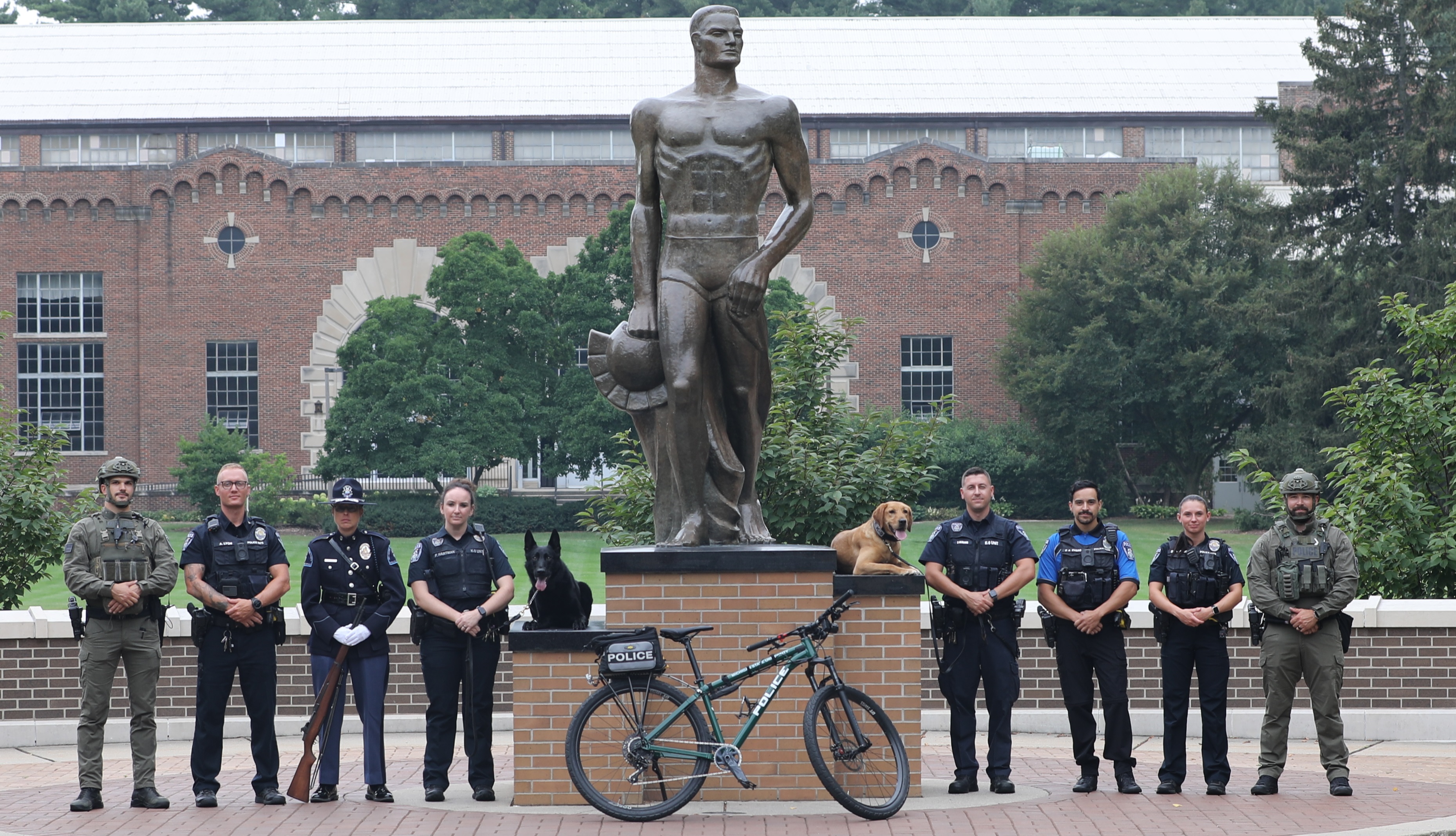
The Specialized Units is led by Deputy Chief Akin Bryant and has responsibility for the following areas and functions: K9 Unit, Comfort Canine Unit, Bike, Honor Guard, Community Outreach, and Special Projects.
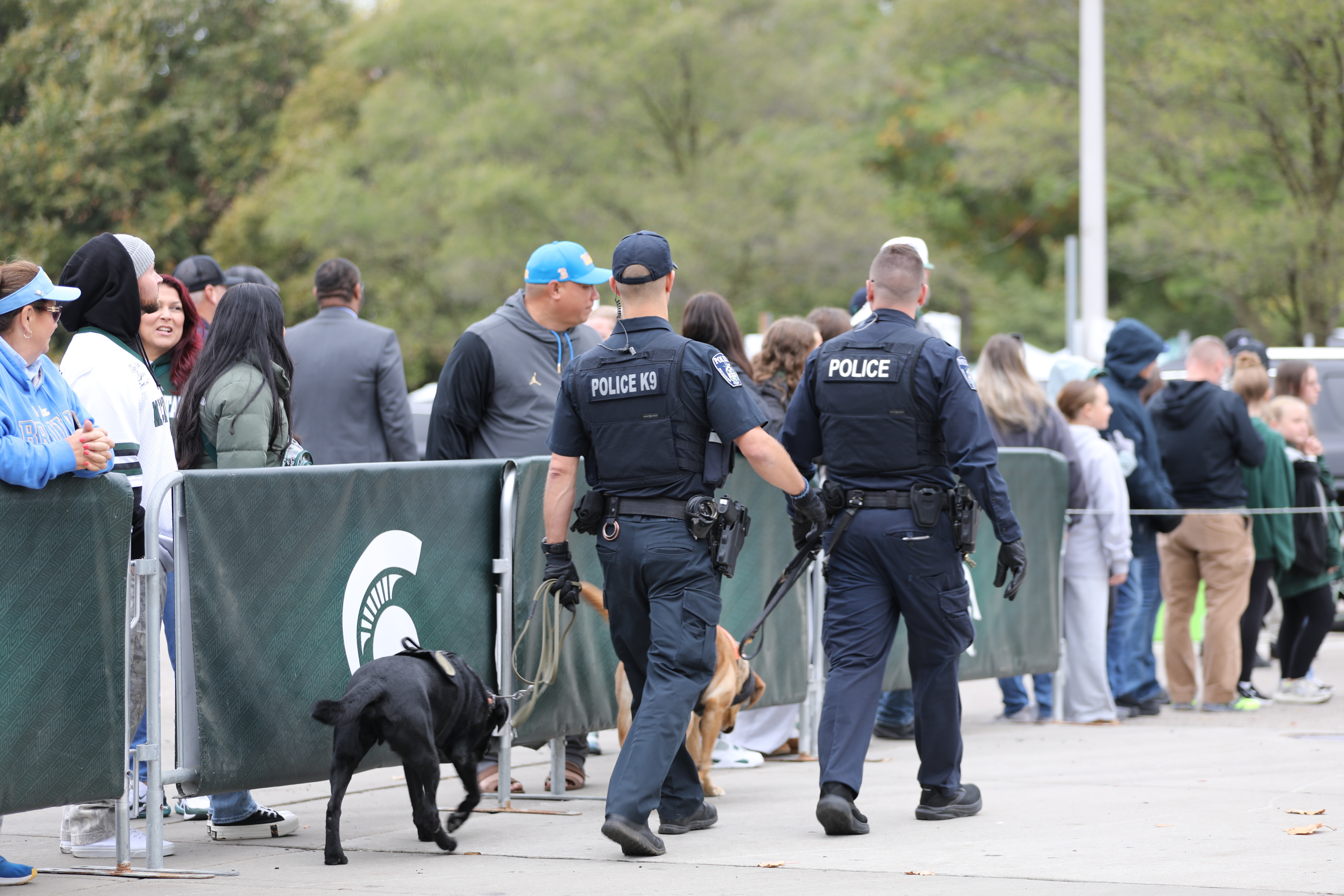
The K-9 Unit is comprised of 5 handlers and 6 K-9s who provide search, detection, and protection services. Four teams are dual-purpose explosive detection-trained and patrol-certified (German Shepherds). The other 4 teams are single-purpose explosive detection teams (Labrador Retrievers).
You can follow the MSU DPPS K-9 Unit on Instagram here.
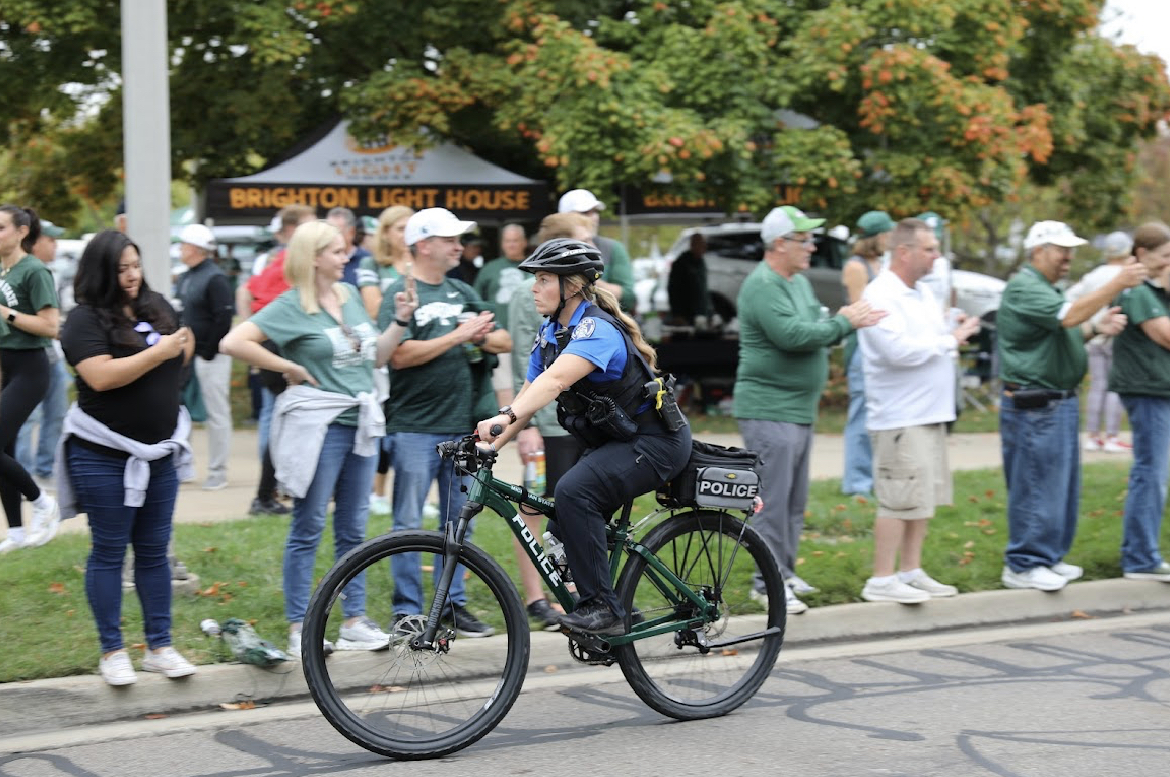
The Michigan State University Department of Police and Public Safety currently has 8 officers assigned to the Bike Unit. All bicycle officers attend a rigorous 40-hour Police Mountain Bike Patrol training program, which certifies them as a bicycle officer. Currently, the Bike Unit utilizes 29” Trek Police model mountain bikes, which includes a new brighter light system to assist with patrols during evening hours. In addition to normal patrol riding, officers escort the MSU football team and band into the stadium on home football game days.
To assist with maintaining the bike officers’ skill levels, two officers assigned to the Bike Unit are trained as certified instructors.